Plasma (physics)
Back to Main Page
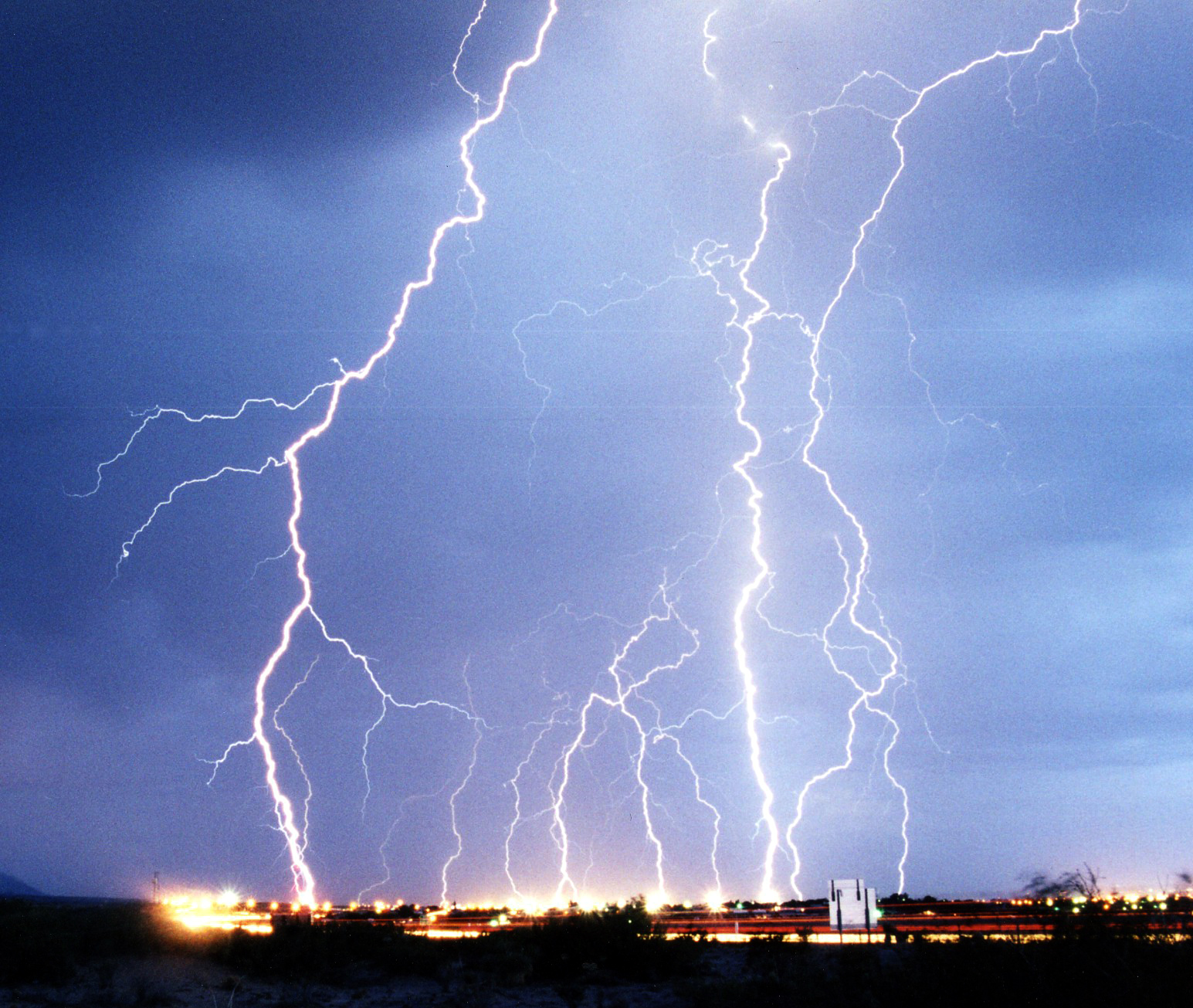
Plasma is a state of matter that forms when ordinary material (usually a gas, since it is first in line for an “upgrade”) becomes so excited about its existence that it starts losing electrons and switches into a mode of “I am no longer neutral, and I’m fine with it.” As a result, a mixture of charged particles is created — ions and electrons — which behave like a very energetic society without central leadership.
Although on Earth plasma can seem exotic (and often unwelcome outside laboratories and thunderstorms), on a cosmic scale the situation is quite different: about 99.9% of ordinary matter has decided that being plasma is the default operating mode. In other words, the Universe as a whole is more like a giant electromagnetic soup than a calm collection of solid objects. Stars fully follow this trend and are almost entirely composed of plasma. Plasma also dominates the vast, diffuse regions between stars and galaxies, as if it were the standard “air” of space — just highly charged and not suitable for breathing. If needed, plasma can be created artificially: it is enough to strongly heat a gas or expose it to a sufficiently powerful electromagnetic field, after which it begins to behave in a much less predictable way.
The presence of charged particles makes plasma electrically conductive, meaning it does not just exist passively but actively responds to electromagnetic fields. Moreover, it responds collectively — as if all particles agreed to behave as a single system that constantly changes its behavior depending on external conditions. This property is what makes plasma useful in technologies such as plasma displays or plasma etching, where controlled chaos turns out to be beneficial. In some cases, plasma still contains neutral particles, and it is then modestly called “partially ionized,” although in behavior it still resembles an electrically excited community rather than a calm gas. Examples include neon signs, which glow as if they are constantly intrigued by something, and lightning — a short but very convincing burst of plasma activity.
Interestingly, the transition to plasma does not have a clear “entry boundary” like other states of matter. There is no universal threshold at which everyone agrees: “yes, this is now plasma.” It depends on context, degree of ionization, and who is observing. In other words, plasma is a state defined not so much by strict rules, but by a shared understanding that the rules here are a bit flexible.
Information source: English Wikipedia.
Text is available under the Creative Commons Attribution-ShareAlike 4.0 License; additional terms may apply.